Traumatic Stress and the Human Nervous System Part One
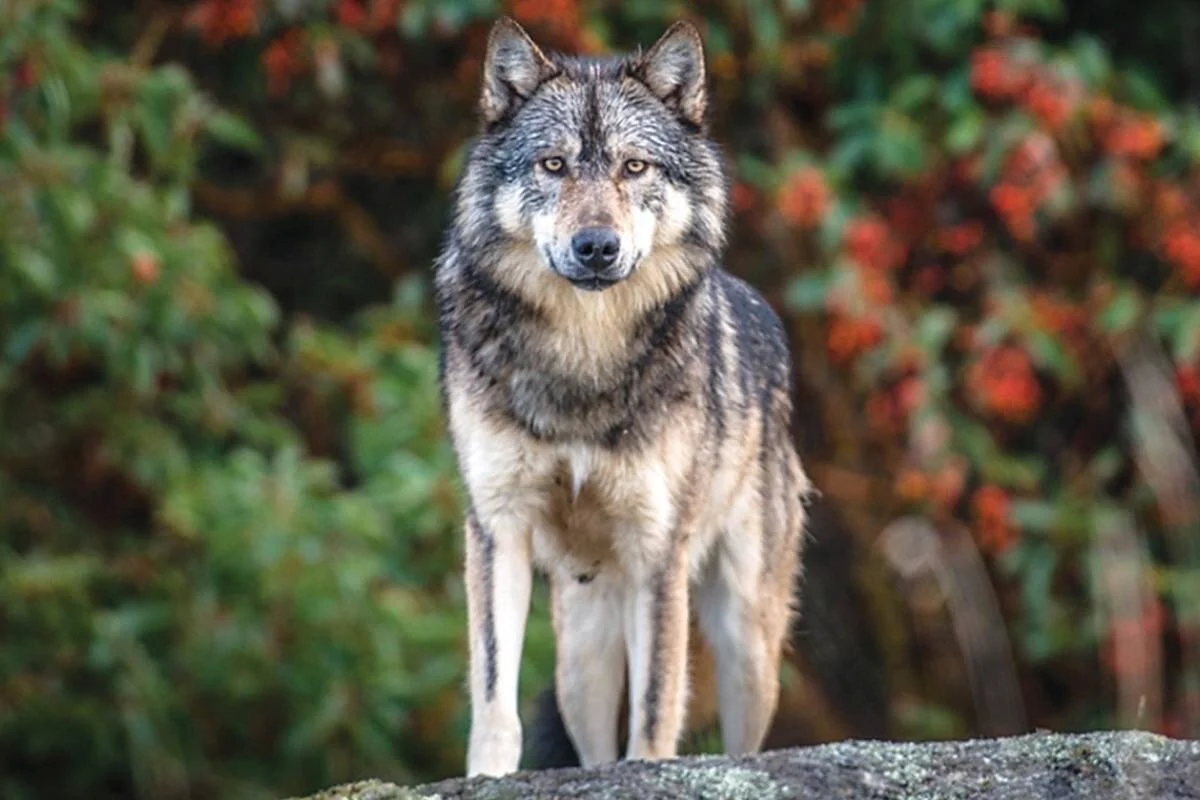
“Life is not a stable process. Our ability to recover is our greatest quality.” — Moshe Feldenkrais.
The Grey Wolf, Canis lupus lives in northern latitudes around the world, including British Columbia. Today, February 22nd 2026 marks two years since I encountered a wolf pack while out walking with my two dogs, and got to experience our Homo Sapiens survival instinct in all its intensity. Two years later, my sense of myself is still greatly changed. Recovery is a process.
A regular Somatic Movement practice is, at its heart, antidote to how we, as an organism, respond to stress, based on the work of Canadian-Hungarian Endocrinologist Hans Selye (and developed by Thomas Hanna and other Somatic Movement practitioners). As humans, we adapt. Human adaptation is the process by which humans (somas) adjust to physical, social and environmental challenges or stressors. But chronic or cumulative stress and traumatic life events can lead to allostatic load — when the body’s stress responses (fight-or-flight) are constantly activated and fail to turn off, they can damage our body’s systems over time.
Stress is often misunderstood. It is not inherently negative, it serves an essential function in our survival by enabling us to respond quickly to threats and challenges. However, the nature and impact of stress can vary significantly, depending on its duration, intensity, and the individual’s perception and coping abilities. PTSD (Post -Traumatic Stress Disorder) can develop after exposure to real or perceived threat of death, serious injury or violence.
The idea that only combat veterans develop PTSD is a pervasive myth. In reality, anyone exposed to a traumatic event—such as sexual assault, accidents, natural disasters, abuse, or a prolonged encounter like mine can develop PTSD, as I unfortunately did. I rarely speak about what happened — an irrational shame keeps me silent. Fear of judgement and stigma is real and keeps many PTSD survivors silent — in sharing this I hope to break any stigma surrounding this often debilitating condition.
I was walking with my two dogs, Indie and Jhana that fateful morning two years ago. I’d parked just off Highway 101 close to my home and we’d walked to the bridge crossing the river on the Eagle’s Crossing trail, which runs alongside the Sliammon River, 15 minutes north of Powell River B.C.
On the way back, I suddenly spotted in the distance, what at first glance I thought was a large German Shepherd dog. Then as my brain suddenly clicked and I realised that no, there were seven or eight — wolves! — and my 14 year-old Indie had spotted them too and was instinctively charging towards them, barking.
It all happened so quickly. Indie quickly was taken down by the pack who started to maul and tear into him with their teeth, drawing blood. At first I ran towards them, attempting to rescue my beloved old boy, but as I got closer and I saw how savage they were survival instinct kicked in — these were wild, unpredictable, cerniverous animals, not dogs —I screamed at my eight-month old Border Collie pup Jhana “COME!” — it took three calls and finally I got her on her lead and we started to escape, scrambling sideways and backwards towards the trail.
Once the wolves were finished with Indie they then turned their attention to me and Jhana, directed by the Alpha wolf. I was stalked by the pack (or more politely ‘escorted’ as Wolf Conservationist Sadie Parr later enlightened me as she explained the behaviour) for around 30 terrifying minutes. The pack semi-circled around me stealthily, silently and cleverly working as a team, as the Alpha followed us closely, about 10 feet away, staring intently and silently with its piercing yellow eyes. Not brown , like a dogs. It was intense. Terrifying.
The whole time I was facing the Alpha, screaming and shouting, trying to make myself look bigger and sweeping a large branch around us so the pack couldn’t get close. It went on and on, Jhana barking shrilly in fear and confusion. I’d already had to leave one dog for dead, there was no way on Earth I was going to let them get the other! Eventually it became unsubstainable to wave the branch. Common sense kicked in momentarily through the surging fight/flight hormones — the branch suddenly weighed a tonne and I dropped it and grabbed a lighter one, still screeching without even having made the conscious decision to do so. Survival in its truest, ancient sense.
At one point rational thought also kicked in momentarily — my phone!!— but it was no use —simply no time or chance to fumble for it. The pack continued circling us silently and at one point it flashed through my mind — was I dreaming this? Was this truly happening? I’d left Indie coverd in blood, being savaged alive, like lions with prey in nature documentaries.
Thankfully I knew the trail well, and that it forked — one way led straight to a house located on the highway. After what seemed like an eternity we eventually made it to the fork in the trail. I then bolted. It felt like I was flying, like my legs were not my own carrying me, so strong was the adrenaline coursing though me. Miraculously, the wolves started to hang back, perhaps hearing the nearby highway 101. I got to the house, hammered desparately on a stranger’s door in panic, and was let in immediately.
To be continued…
In part two I will conclude the story of what happened later that day and how the event has affected me and impacted my life. Most importantly, I will discuss methods (Somatic Movement based and other) and resources that have been vital to my own (ongoing) recovery, that may be helpful for others affected by trauma.
As Bessel van der Kolk says: “Trauma happens to us, our friends, our families, and our neighbours.” Eight percent of adults in Canada experience PTSD; in the U.K. the figure is 4%, although the actual figure is expected to be higher and does not include C-PTSD. But to quote van der Kolk again: “ We have the ability to regulate our own physiology, including some of the so-called involuntary functions of the body and brain, through such basic activities as breathing, moving and touching.” As PTSD is a physiological disorder (with both physical and neurobiological changes taking place in the brain) healing, I believe, happens physiologically, via movement and sensing. And of course, in community :)
“Movement is life. Life is a process. Improve the quality of the movement and you improve the quality of life itself.” — Thomas Hanna Ph.D.