How Smiling Leads to Learning
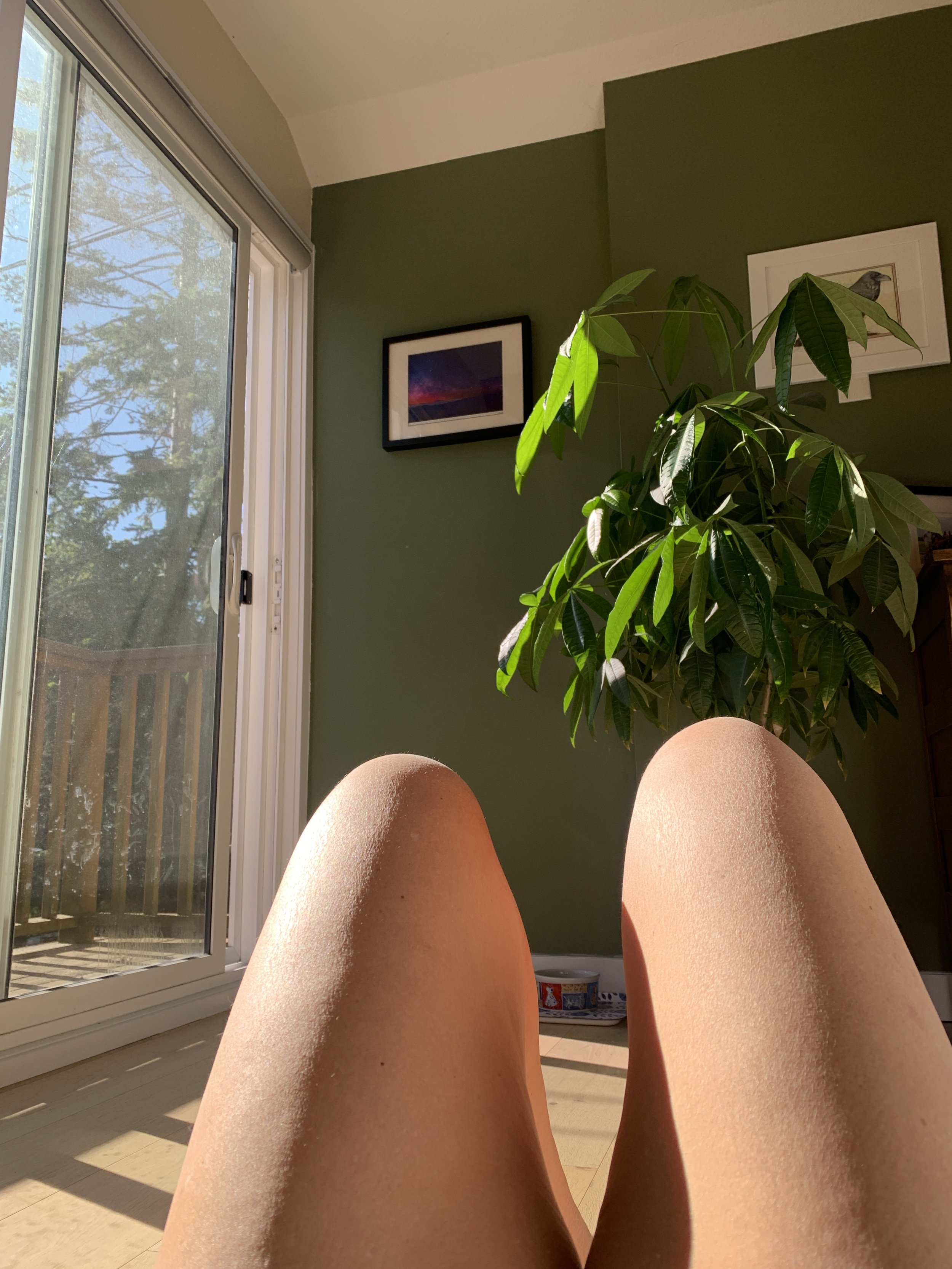
Creative Morning Exploration, Summer Solstice 2026
"One has to set about learning to learn as is befitting for the most important business in human life; that is, with serenity but without solemnity, with patient objectivity and without compulsive seriousness. Clenching the fists, tensing the eyebrows, tightening the jaw are expressions of impotent effort. It is possible to succeed in spite of these faults only at the expense of truly healthy joy of living.
Learning must be undertaken and is really profitable when the whole frame is held in a state where smiling can turn into laughter without interference, naturally, spontaneously."— Moshe Feldenkrais, The Potent Self.
At 1:04 am on Summer Solstice, while most of us slept, the sun reached its northernmost point in the sky and has now begun to steadily, stealthily, turn back. It’s hard to sense that the light is actually waning at this vividly bright, hot time of year, yet the frantic Spring growing season is also slowly waning, and the intense heat invites us to seek shade and rest. As I drifted off to sleep, approaching midnight on the eve of the Solstice, the sudden, ethereal sound of humpback whale breath echoed across a pond still Salish Sea, awakening awe and wonder. Fully present and awake in that moment, nothing else mattered.
It’s this sense of joy, presence and curiosity, that we need to cultivate when we practice. As Feldenkrais practitioner Zoe Birch says, “Our nervous systems don’t learn when we’re mean to them.” If we’re in pain and want to get out of it, we naturally seek only to remove the pain, but that leaves us stuck in the same unhelpful ruts, entranched habits that somehow led to pain in the first place. However, If we can somehow learn to be as we move, that opens up gateways of new learning rather than the nervous system making fear-based predictions based on past experience. Thoughts and emotions, often fear-based such as “Is this movement going to hurt?” “Am I doing it right?” “Why can’t I do this movement anymore?” only get in the way of true, present moment exploring and yank us into sympathetic drive.
If we widen our lens of awareness, change how we practice(attitude/spirit), it opens us up to new possibilities of moving and being in this life. When I discovered Somatics, seeking answers for neck pain, I was after one thing: the pain to be gone so I could carry on rushing and pushing through my very active, full life. Without knowing it, I’d been lost. I approached ‘the pain’ with a ‘fix it’ attitude, as if I was a machine rather than a Soma, a living, breathing process, and as if pain was static and solid. Although I’d avidly practised yoga for six years (including three 30 day challenges of course!) and was an accomplished snowboard athlete and mountain biker I had no idea how to be as I moved: always striving, pushing, effort, effort, effort! It’s taken me years to understand that seeking improvement and progress rather than ‘cure’ or goal lessens the culturally driven sense of internal pressure and striving (where real change is impossible). Change can only happen in the present; in simple terms when our right brain is running the show, new pathways of movement and possibility can appear.
How many of us move for the sheer pleasure of it, from a direct feeling of loving the experience of flowing movement, with no need for reason or results? This is the place where real change can happen, organic learning allows new pathways to develop. My dog Jhana, loves to roll on her back in the grass, just because it feels good. If only our society encouraged this way of moving, rather than striving for goals, steps, numbers, achievement, health and wellness as status.
Yes, I’d love to have less pain. But these days I love a good giggle at myself when I find I’m taking movement too seriously. When the brain has different information — without judgement — it will integrate the new information spontaneously. That’s how real healing and improvement occurs. Not by forcing some end result, but by feeling differences and letting them be. Then they find their own equilibrium.
It is, of course, a process. A process in which, even when learning seems to have plateaued, we must keep the faith and persevere — knowing, and believing deeply that our nervous systems are inherently intelligent, self-organizing and seek out stability and balance. The adaptability of our ancient, intelligent, nervous systems is profound!
“Movement is life. Life is a process. Improve the quality of the process and you improve the quality of life itself." — Moshe Feldenkrais.
Feldenkrais was an Israeli physicist, a black belt in Judo and one of the original minds of the twentieth century. He was also Thomas Hanna’s teacher. Feldenkrais worked with improving movement, but his goal was awareness of the whole self, the ability to know what one is doing and use effective action in one’s life. Grateful for my lineage! And to the current teachers that I learn from that keep this work alive, and develop it further.